Follow the equipment from car to water
Assess the estate as a sequence of small journeys. Where do you unload? How far is the room from the parking area? Where does wet equipment go? How does a rod reach the bank without being dismantled repeatedly or carried through a dining room? None of these questions is glamorous, but together they determine whether early starts and late returns feel easy or awkward.
Request an approximate route description and recent photographs. A lake described as “on the doorstep” may be visible from the house yet reached by a steep path. Ask about steps, loose surfaces, gates and vehicle restrictions. Where mobility or fatigue matters, a measured route and a description of gradients are more useful than a reassuring adjective.
Distinguish storage from security
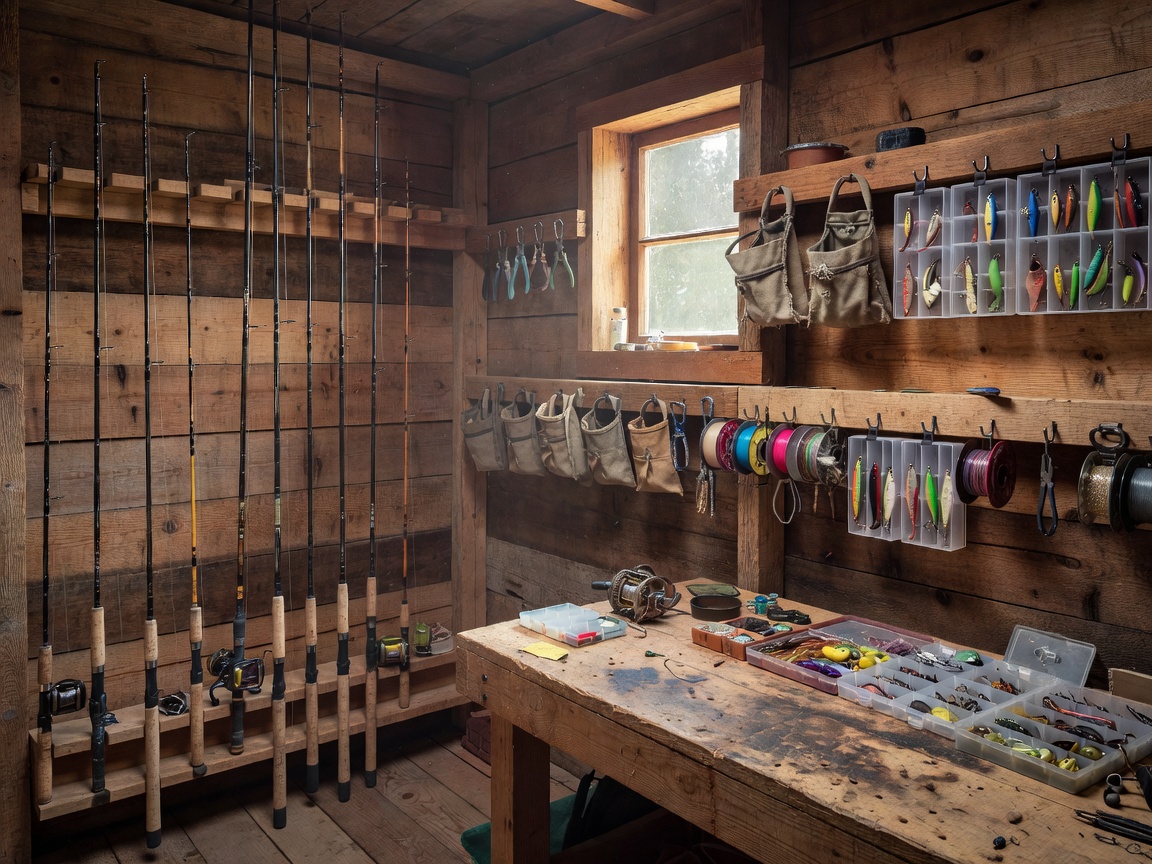
A tackle room is not necessarily a secure tackle room. Establish whether it is private to your party, shared with other guests or used by estate staff. Ask who holds keys, when access is available and whether long rods can be stored safely. If valuable equipment is coming with you, check your own insurance conditions rather than assuming that a locked outbuilding automatically satisfies them.
Separate clean storage, wet storage and food preparation. Bait, boots and waders should not create avoidable problems in accommodation used by the whole party. If bait refrigeration is offered, confirm that it is dedicated to that use and permitted for your intended bait. A kitchen fridge should never become the default solution without explicit agreement.
Inspect drying and cleaning arrangements
“Drying facilities” can mean anything from a ventilated room to a hook beside a heater. Ask what the space can accommodate, whether outdoor clothing can dry overnight and whether equipment-cleaning rules restrict where you may wash items. Wet waders and bulky bags need room to drain without blocking an exit or introducing mud into living areas.
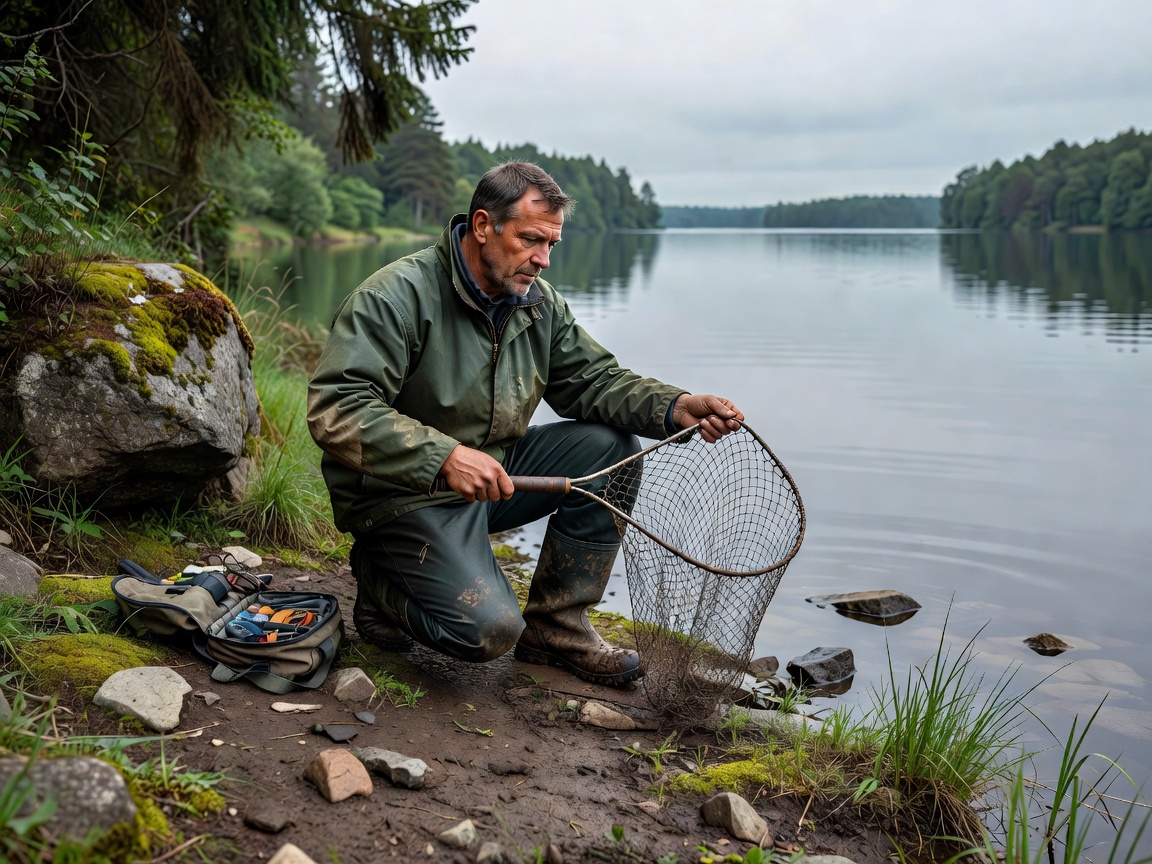
Biosecurity adds another requirement. The GB Non-native Species Secretariat’s Check, Clean, Dry guidance explains why removing debris and allowing equipment to dry matters between waters. Confirm whether the estate supplies nets or other items that must remain on site. If it specifies a disinfection process, obtain the instructions before arrival rather than improvising with a household cleaning product.
Match the fishing position to the angler
Bank quality should be described at the position you will actually use. Ask whether the ground is level, what lies behind the casting area and whether a platform has a clear edge. Someone using a wheelchair may need information about turning space, surface firmness, transfer arrangements and the accessible toilet route. A single photograph of a platform does not establish an accessible fishing experience.
For newcomers, practical support can matter more than equipment quantity. Establish whether instruction is available, who provides it, what it covers and whether it must be reserved. Borrowed tackle should be appropriate to the named species and fishery rules. The Angling Trust’s Get Fishing resources offer a useful introduction to trying angling in England; they do not establish the competence or availability of an individual estate’s instructor.
Rod hire, bait, instruction, landing equipment and access to a boat may be separate items. Obtain the equipment list and any deposit or damage terms in writing.
Understand water safety and emergency access
Establish the estate’s procedure for raising an alarm, including the exact site address, access gate and best place to meet emergency services. Mobile reception can differ between the house and a sheltered bank. Ask how a guest contacts staff outside normal hours, and what happens if the designated contact is unavailable. An emergency number on a noticeboard is helpful, but the surrounding arrangements matter too.
If boats are offered, treat them as a separate decision rather than an automatic amenity. Ask about permitted use, weather limits, appropriate buoyancy equipment, instruction and supervision. The RNLI’s water-safety guidance provides general context, but the provider must explain the particular craft and water. Do not infer boat permission from the presence of a jetty in a photograph.
Prefer a usable base to a longer amenities list
A modest but well-organised facility can be more valuable than a grand lodge with unclear routines. The test is whether you can understand how the place works before arriving. Secure storage, an honest route description, suitable cleaning arrangements and a named person to ask are tangible benefits. They reduce friction without needing to promise a catch.
Finally, agree how equipment, keys and any damage will be checked at departure. A straightforward handover protects both parties and avoids making the last morning a negotiation. Facilities should support the fishing and the shared holiday, not become another set of uncertainties to manage.